


Explore Kipling’s wisdom on true wealth and purpose. Learn why character, meaning and inner strength matter more than money and unlock real potential.
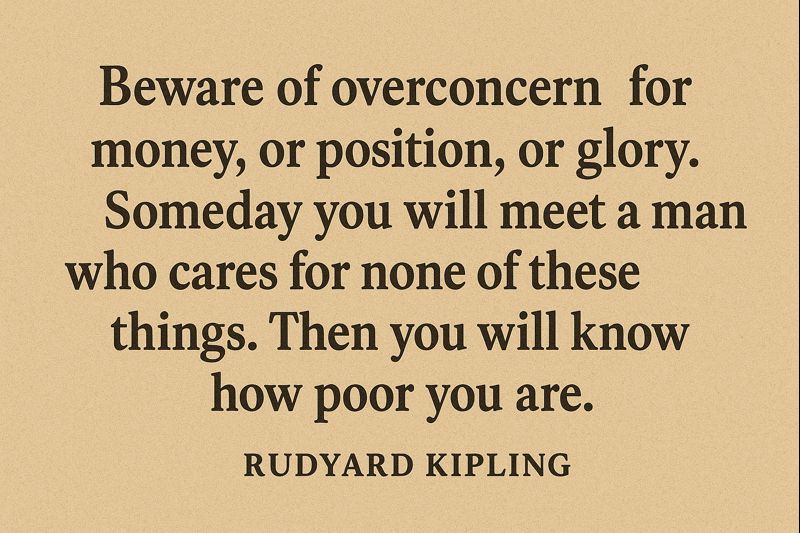
“Beware of overconcern for money, or position, or glory. Someday you will meet a man who cares for none of these things. Then you will know how poor you are.” — Rudyard Kipling.
In a world driven by ambition, competition, and the pressure to “prove yourself,” Rudyard Kipling’s words arrive like a quiet but powerful wake-up call. His message challenges us to rethink what success truly means—and invites us to discover a deeper, more meaningful form of potential.
This article explores the wisdom behind the quote, why it still matters today, and how real people have embodied this principle to unlock extraordinary impact in the world.
Understanding Kipling’s Message: What Truly Makes You Rich?
Kipling warns against placing too much value on money, status, and glory. These external markers are temporary and fragile. What happens when you meet someone who isn’t impressed by them—someone whose worth is defined by character, purpose, and inner strength?
Suddenly, your own “wealth” feels small.
Kipling is not condemning ambition—he’s redefining it.
He urges us to develop the kind of potential that does not depend on external validation, but on qualities like:
- Integrity.
- Compassion.
- Wisdom.
- Courage.
- Purpose-driven living.
- Service to others.
This is the type of wealth that cannot be taken away. It is the foundation of true personal power.
Why This Quote Inspires Potential.
Your potential is not unlocked by chasing what everyone else is chasing. Instead, it expands when you:
- Shift your values from “What do I gain?” to “What do I become?”
- Build inner confidence, not performative success.
- Commit to growth, not applause.
- Serve meaning, not ego.
People who operate from purpose instead of fear always influence the world more deeply. They shine even without trying to shine. They do not need status—status finds them.
Three Inspiring Examples of People Who Lived Beyond Money, Position, and Glory.
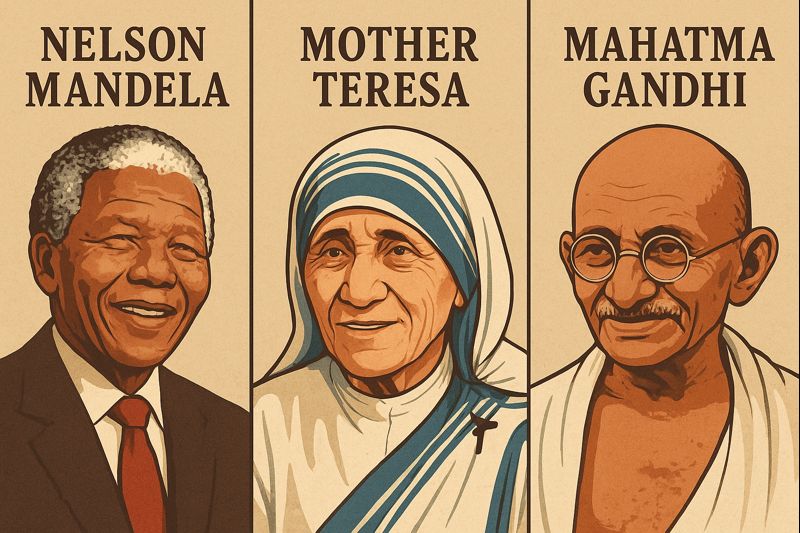
1. Nelson Mandela — Purpose Over Power.
Mandela spent 27 years in prison, yet emerged without bitterness. His greatest achievement was not becoming president—it was choosing forgiveness over revenge.
What made Mandela powerful was not his position, but his character.
He demonstrated that true leadership comes from principle, not pride.
2. Mother Teresa — Compassion Over Recognition.
Mother Teresa lived among the poor, the sick, and the forgotten—not for glory, but out of selfless love.
She rejected comfort, wealth, and status, yet she became one of the most respected humanitarians in history.
Her influence came from the purity of her intention, not her title.
3. Mahatma Gandhi — Simplicity Over Glory.
Gandhi owned almost nothing. He refused luxury, honors, or political titles. Yet he led one of the most powerful freedom movements in history.
Why?
Because people follow authenticity more than authority.
His potential came from inner strength, not external privilege.
What This Means for You: How to Unlock Your Own Deep Potential.
Here are practical ways to use Kipling’s message to grow stronger, wiser, and more impactful:
1. Build your character daily.
Your honesty, discipline, and courage have more long-term value than titles or wealth.
2. Seek purpose, not applause.
Your work becomes more powerful when done for meaning, not validation.
3. Value people more than possessions.
Your relationships, kindness, and influence are the true indicators of richness.
4. Grow your mind.
Knowledge, resilience, and emotional strength outlast any career or financial gain.
5. Live with integrity.
Even without recognition, your principles position you for sustainable success.
Conclusion: Why True Wealth Comes From Within.
Kipling’s quote reminds us that wealth measured by money or status is fragile, but wealth rooted in purpose is eternal. The people who change the world are not those who chase recognition, but those who chase meaning.
By focusing on character, compassion, and purpose, you unlock the kind of potential that cannot be bought, taken, or diminished.
You become the person others look up to—not because of what you have, but because of who you are.