

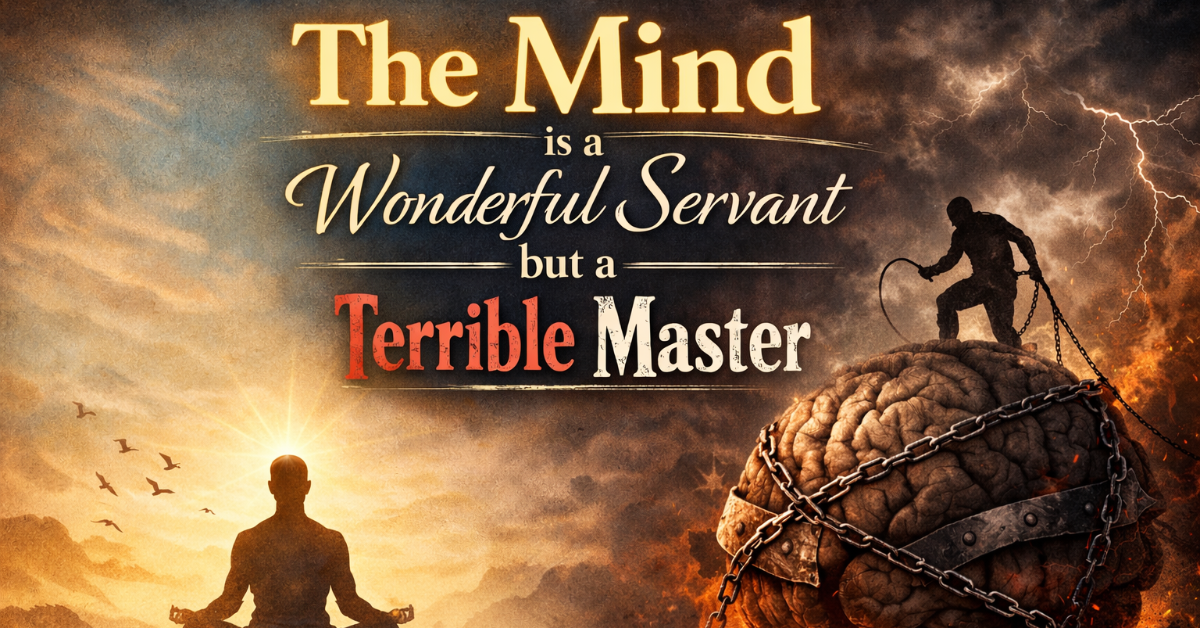

Discover the meaning of “the mind is a wonderful servant but a terrible master” and learn practical ways to control thoughts and improve mental clarity daily.
Introduction.
“The mind is a wonderful servant, but a terrible master.”
This timeless quote captures one of the most important truths about human psychology: when you control your mind, it empowers you; when it controls you, it limits your life.
In today’s fast-paced world filled with distractions, anxiety, and constant information overload, understanding this idea is more important than ever. This article explores the meaning of this quote, why it matters, and how you can train your mind to serve you instead of ruling you.
What Does “The Mind Is a Wonderful Servant, But a Terrible Master” Mean?
This quote highlights the dual nature of the human mind.
- As a servant, the mind is powerful, creative, and intelligent. It helps you solve problems, learn new skills, plan your future, and achieve success.
- As a master, the mind becomes chaotic. It can generate fear, doubt, overthinking, anxiety, and negative self-talk that holds you back.
In simple terms, your mind is designed to support your goals—not to define or control them.
Why the Mind Becomes a “Terrible Master”
When the mind is left unchecked, it often falls into patterns such as:
1. Overthinking
Constantly replaying past mistakes or worrying about future outcomes drains mental energy and creates stress.
2. Fear-Based Thinking
The mind naturally tries to protect you, but it often exaggerates danger and discourages risk-taking.
3. Negative Self-Talk
Phrases like “I can’t do this” or “I’m not good enough” become internal programming that limits growth.
4. Emotional Reactivity
When emotions control thoughts, decisions become impulsive rather than rational.
How to Make the Mind a Powerful Servant.
The goal is not to silence the mind, but to train it. Here are practical ways to regain control:
1. Practice Mindfulness
Mindfulness helps you observe your thoughts without becoming controlled by them.
When you notice thoughts without reacting, you create mental space and clarity.
2. Reframe Negative Thoughts
Instead of accepting negative thoughts as truth, question them:
- Is this thought actually true?
- What evidence do I have?
- What would I say to a friend thinking this?
3. Focus on Action, Not Thoughts
The mind becomes weaker as a “master” when you prioritize action. Discipline reduces overthinking.
4. Meditation and Stillness
Regular meditation strengthens awareness and helps you separate yourself from your thoughts.
5. Feed Your Mind Wisely
What you consume shapes your thinking. Positive books, meaningful conversations, and inspiring content help build a healthier mental environment.
The Psychology Behind the Quote.
Modern psychology supports this idea. Cognitive Behavioral Therapy (CBT), for example, is based on the principle that thoughts influence emotions and behavior.
If you change your thinking patterns, you change your life experience. This proves that while the mind is powerful, it is not always accurate—and it must be guided.
Real-Life Example
Imagine two people facing the same failure:
- Person A (mind as master): “I failed. I’m not capable. I should stop trying.”
- Person B (mind as servant): “I failed, but I can learn from this and improve.”
The situation is the same, but the mental control changes everything.
Conclusion.
“The mind is a wonderful servant, but a terrible master” is more than a quote—it is a life strategy.
When you learn to observe, guide, and discipline your thoughts, you unlock clarity, confidence, and purpose. But when you allow your mind to run unchecked, it can become your biggest obstacle.
The real power lies not in stopping your thoughts, but in leading them.