

Søren Kierkegaard reminds us that true wishes should not focus on fleeting wealth or power, but on the passionate recognition of potential.

By nurturing this vision in ourselves, we unlock personal growth, creativity, and fulfillment. By seeing it in others, we create a world where possibilities are realized, talents are unleashed, and lives are transformed.
Ask yourself today: Am I recognizing potential in myself? Am I nurturing it in those around me?
Discover Søren Kierkegaard’s wisdom on wishing not for wealth or power, but for the vision to see potential in yourself and others. Learn practical ways to inspire growth.
Søren Kierkegaard, the 19th-century Danish philosopher, once wrote:
“If I were to wish for anything, I should not wish for wealth or power, but for the passionate sense of the potential, for the eye which, ever young and ardent, sees the possible.”
These profound words remind us that life’s true value does not lie in material wealth, social status, or power. Instead, fulfillment comes from cultivating the ability to see possibilities and potential—both in ourselves and in others.
In a world that often prioritizes money and influence, Kierkegaard’s insight is a timeless call to focus on what truly matters: growth, vision, and the courage to act on possibilities.
The Limitations of Wealth and Power.
Many people strive for wealth or power, believing these will bring happiness or security. While money can provide comfort and power may bring control, both are transient.
Kierkegaard teaches us that true fulfillment is not external—it comes from cultivating an inner vision of what could be. This vision allows us to:
- Recognize opportunities others overlook.
- Pursue meaningful goals.
- Inspire ourselves and others to achieve greatness.
Wealth and power may open doors, but the eye that sees potential transforms lives.
The Eye That Sees Possibility.
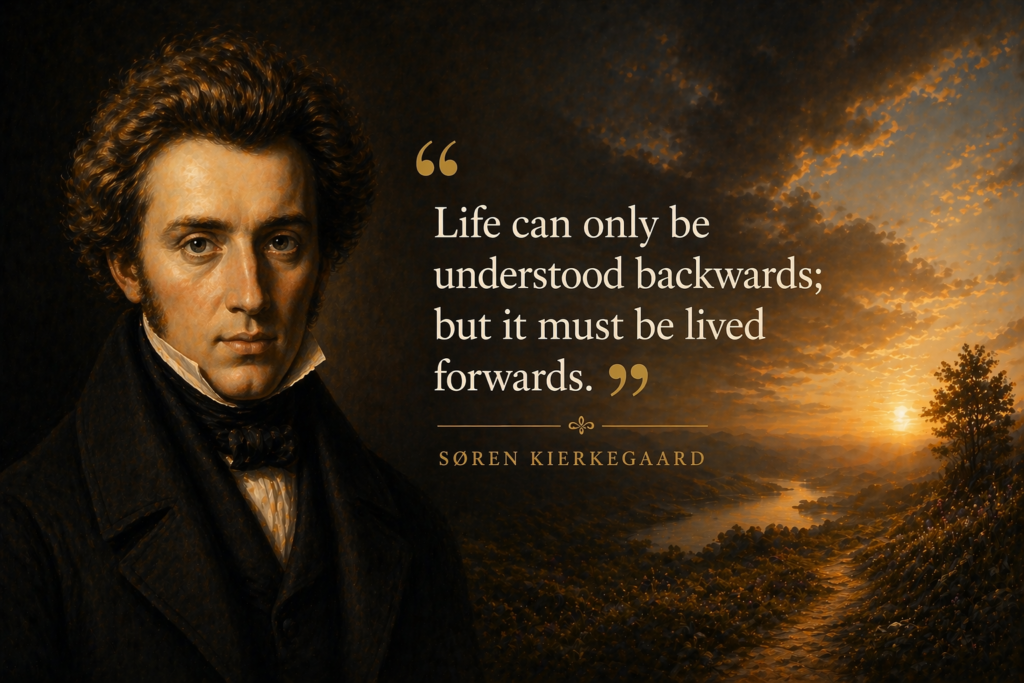
Kierkegaard’s concept of “the eye which sees the possible” refers to a mindset rooted in curiosity, creativity, and hope. People who develop this mindset:
- Approach challenges as opportunities rather than obstacles.
- Remain eager to learn and grow at any stage of life.
- See beyond limitations and focus on solutions.
- Encourage others to step into their potential.
This way of thinking nurtures resilience, innovation, and meaningful contribution.
Seeing Potential in Others.
Kierkegaard’s wisdom also applies to how we view other people. To see potential in others is to recognize their hidden talents, strengths, and possibilities, even when they themselves may not see it.
This mindset is transformative:
- Mentors and leaders can guide individuals to grow and develop.
- Teachers and parents can inspire curiosity and confidence.
- Colleagues and friends can help unlock creativity and initiative.
Practical Ways to Foster Potential in Others.
- Mentorship and Guidance – Offer thoughtful advice, encouragement, and insight. Help others understand their strengths and how to apply them.
- Celebrate Progress, Not Just Outcomes – Recognize effort, learning, and incremental achievements rather than focusing solely on success or perfection.
- Provide Opportunities – Encourage people to take on challenges, try new things, and explore their talents.
- Listen and Observe – Sometimes, potential is hidden in quiet moments or subtle talents. Pay attention to what others are passionate about.
- Model Vision and Courage – Demonstrate through your own actions how to embrace possibilities and pursue meaningful goals.
Historical Examples of Seeing Potential in Others.
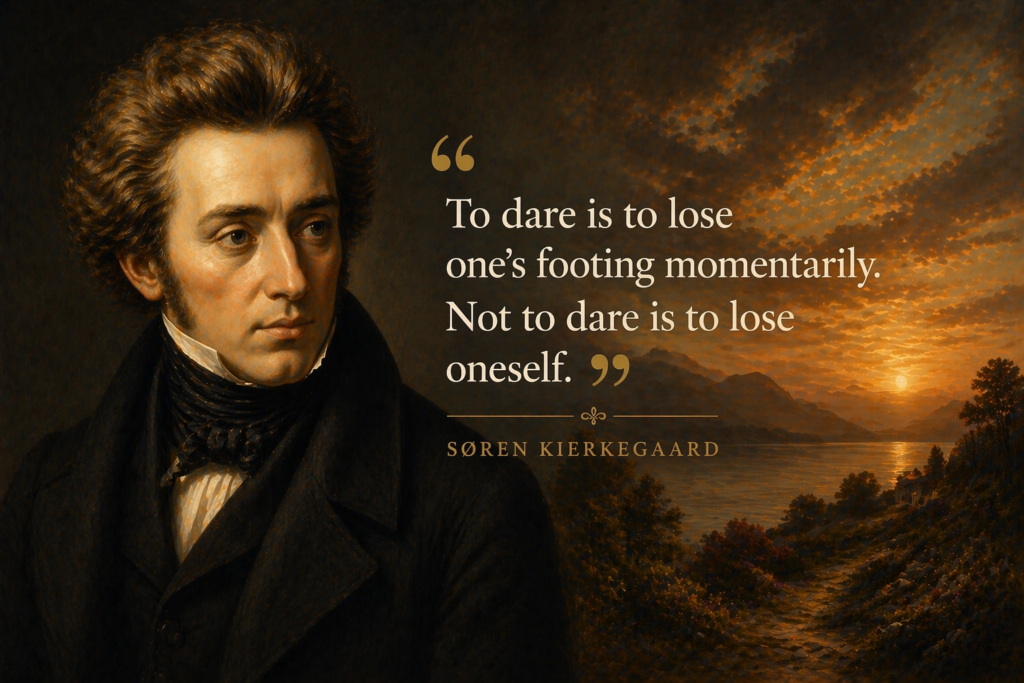
Many leaders have exemplified Kierkegaard’s principle:
- Nelson Mandela recognized leadership potential in fellow activists and nurtured a movement for freedom.
- Mahatma Gandhi empowered ordinary citizens to embrace nonviolent action, unlocking courage and agency they hadn’t realized they possessed.
- Oprah Winfrey mentored countless individuals, providing platforms and guidance for them to realize their impact.
- Albert Einstein cultivated the curiosity of students and colleagues, encouraging scientific discovery and innovation.
These examples illustrate that nurturing potential in others often leaves a legacy far more meaningful than wealth or personal power ever could.
The Benefits of Cultivating This Mindset.
Focusing on potential—your own and others’—creates:
- Resilience: A belief in possibility helps navigate challenges with hope and creativity.
- Empowerment: People are more motivated when they feel their potential is seen and valued.
- Innovation: Possibility-focused thinking sparks new ideas and solutions.
- Meaningful Impact: Supporting growth in others multiplies influence beyond what one person could achieve alone.
Conclusion.
By nurturing this vision in ourselves, we unlock personal growth, creativity, and fulfillment. By seeing it in others, we create a world where possibilities are realized, talents are unleashed, and lives are transformed.
Ask yourself today: Am I recognizing potential in myself? Am I nurturing it in those around me?